
Table Of Contents
- Understanding CAD Layers in Engineering Translation
- Why Layer Organization Matters for Translation Projects
- Essential CAD Layer Tips for Translation Preparation
- Common Challenges When Translating CAD Files
- Best Practices for Multilingual Engineering Drawings
- Working with Professional Translation Services
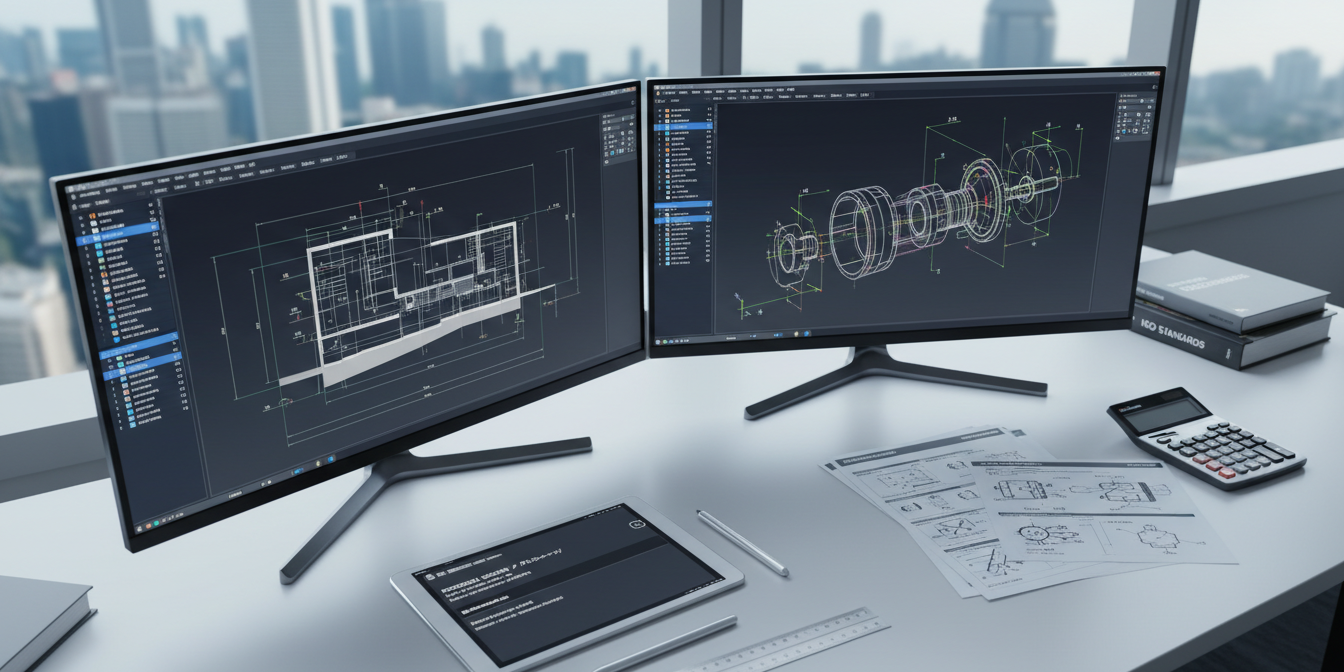
Engineering drawings serve as the universal language of manufacturing, construction, and product development. However, when these technical documents need to cross language barriers, the complexity multiplies exponentially. Unlike standard document translation, engineering drawings contain intricate layers of information in CAD (Computer-Aided Design) software, where text, dimensions, annotations, and graphical elements coexist in a delicate balance.
For companies operating in the global marketplace, particularly in manufacturing hubs like Singapore and across the Asia Pacific region, the ability to accurately translate engineering drawings while maintaining technical integrity is critical. A misplaced dimension or mistranslated specification can result in costly manufacturing errors, project delays, or even safety hazards.
This comprehensive guide explores the essential CAD layer management techniques that ensure your engineering drawings translate accurately across languages. Whether you’re an engineer preparing files for translation, a project manager overseeing multilingual technical documentation, or a business leader expanding into international markets, understanding these CAD layer principles will help you maintain precision and avoid costly mistakes in your technical translation projects.
Understanding CAD Layers in Engineering Translation
CAD layers function much like transparent sheets stacked on top of each other, with each layer containing specific types of information. In a typical engineering drawing, you might have separate layers for dimensions, text annotations, centerlines, hidden lines, section cuts, and the actual object geometry. This organizational structure, while essential for design work, creates unique challenges when preparing documents for translation.
When translation professionals receive CAD files, they need to identify which layers contain translatable text, which elements must remain untouched, and how to preserve the spatial relationships between all components. Unlike word processing documents where text flows naturally, CAD drawings position text elements with pixel-perfect precision. Moving or resizing translated text without understanding the layer structure can disrupt the entire drawing’s readability and technical accuracy.
The most common CAD formats requiring translation include AutoCAD (DWG, DXF), SolidWorks, CATIA, Inventor, and Revit files. Each platform has its own layer management conventions, but the fundamental principles of organizing content for translation remain consistent. Understanding these principles before sending files to translation services dramatically reduces turnaround time, minimizes revision cycles, and ensures the translated output maintains professional quality standards.
Why Layer Organization Matters for Translation Projects
Proper layer organization before translation is not merely a convenience—it’s a fundamental requirement for maintaining engineering drawing integrity. When layers are poorly organized, translators face a frustrating puzzle of identifying which text elements belong together, understanding their context, and determining their hierarchy of importance. This confusion leads to longer project timelines, higher costs, and increased risk of errors that could have serious downstream consequences.
Consider a manufacturing drawing sent to a facility in Vietnam or Thailand. If dimension callouts, tolerance specifications, and material notes are scattered across multiple unnamed layers mixed with graphical elements, the translation team must spend valuable hours simply deciphering the file structure before actual translation work begins. This preliminary work, known as file engineering or pre-processing, can sometimes take longer than the translation itself.
Furthermore, well-organized layers enable efficient quality control. When text elements are clearly separated and systematically named, reviewers can quickly verify that all translatable content has been addressed and that technical specifications remain accurate. This becomes especially critical for industries like aerospace, automotive, or pharmaceutical manufacturing, where regulatory compliance depends on precise documentation. Professional proofreading services can work more effectively when they can easily navigate the layer structure to verify both linguistic accuracy and technical consistency.
Essential CAD Layer Tips for Translation Preparation
Separate Text from Graphics
The single most important step in preparing CAD files for translation is creating clear separation between text elements and graphical components. Ideally, all translatable text—including annotations, callouts, labels, and notes—should reside on dedicated text layers, completely separate from the geometry, dimension lines, and other visual elements. This separation allows translators to work confidently without risk of accidentally modifying critical design geometry.
In practice, this means creating distinct layers such as “TEXT-ENGLISH,” “NOTES-ENGLISH,” or “ANNOTATIONS-ENGLISH” that contain only text objects. When you prepare drawings for multiple language versions, you can then duplicate these text layers for each target language, creating “TEXT-CHINESE,” “TEXT-MALAY,” or “TEXT-JAPANESE” as needed. This parallel layer structure makes it simple to toggle between language versions and ensures that each translation occupies the exact spatial position as the source text.
Many engineering teams make the mistake of placing text and graphics on the same layer for visual convenience during the design phase. While this might seem efficient initially, it creates significant complications during translation. Translators cannot lock or hide graphical elements to focus solely on text, increasing the risk of accidental modifications. Taking the time to reorganize layers before translation saves far more time than it costs and significantly reduces the potential for errors.
Use Consistent Layer Naming Conventions
Descriptive, consistent layer names serve as a roadmap for translation teams navigating your CAD files. Rather than using generic names like “Layer 1,” “Layer 2,” or cryptic abbreviations understood only within your organization, implement a systematic naming convention that clearly indicates each layer’s purpose and content type. This practice aligns with international standards and makes collaboration with external translation providers much more efficient.
A robust naming convention might include prefixes indicating content type (TEXT, DIM, ANNO, GEOM), followed by descriptors for the specific content, and potentially suffixed with the language code. For example: “TEXT-GENERAL-EN,” “TEXT-GENERAL-ZH,” “DIM-MECHANICAL,” “ANNO-WARNINGS-EN,” and “GEOM-ASSEMBLY.” This structure immediately communicates what each layer contains and whether it requires translation.
Consistency across your organization’s CAD files compounds the efficiency gains. When translation teams work repeatedly with your company, they learn your naming conventions and can process subsequent projects more quickly. This is particularly valuable for ongoing relationships with professional translation services that handle multiple projects for your organization over time. The initial investment in establishing and documenting your layer naming standards pays dividends across every future translation project.
Manage Dimensions and Annotations Carefully
Dimensions and technical annotations present unique challenges in engineering drawing translation. While the numerical values typically remain unchanged across languages, the accompanying units, tolerance notations, and descriptive text must be translated and potentially adapted to match the target region’s standards. In some cases, dimensions may need conversion between metric and imperial systems, or technical standards may require reformatting to comply with local conventions.
Place dimension text on separate layers from the dimension lines and geometry themselves. This allows translators to modify the text components (like “inches” to “寸” in Chinese or changing “dia.” to “Ø” per ISO standards) without disrupting the dimension lines or extension lines. Some CAD systems automatically link dimension text to geometry, which can be helpful for design updates but complicates translation work. Understanding how your specific CAD software handles these relationships is essential.
For critical dimensions that should never change, consider placing them on locked or reference layers clearly labeled as “DO-NOT-TRANSLATE” or “REFERENCE-ONLY.” This prevents accidental modification during the translation process. Additionally, maintain a separate layer for general annotations and notes that provide context, manufacturing instructions, or assembly guidance. These elements typically require full translation and may even need localization services to ensure they align with regional manufacturing practices and terminology.
Freeze Reference and Background Layers
Engineering drawings often include reference information such as title blocks, company logos, standard symbols, or template elements that should remain consistent across all language versions. These elements should be placed on dedicated reference layers that are frozen or locked before sending files for translation. Frozen layers remain visible for context but cannot be accidentally selected or modified, providing a safeguard against unintended changes.
Typical reference layers might include company branding elements, border frames, revision history blocks (though the text within may need translation), standard technical symbols that are internationally recognized, and background grids or construction geometry used during the design phase. By clearly identifying and protecting these layers, you ensure that only the intended content undergoes translation while maintaining the drawing’s professional appearance and technical framework.
When working with translation providers, communicate clearly which layers are reference-only and which require translation. Professional services experienced in technical documentation will appreciate this guidance and can configure their desktop publishing services workflows accordingly. This clear communication eliminates ambiguity, reduces the need for clarification during the project, and accelerates delivery of your translated engineering drawings.
Common Challenges When Translating CAD Files
Even with well-organized layers, translating engineering drawings presents several inherent challenges that require awareness and planning. Text expansion is among the most common issues: translated text often occupies more space than the original, particularly when translating from English to languages like German, Russian, or Arabic. A concise English label like “Valve” might become “Absperrventil” in German, requiring significantly more horizontal space without overlapping other drawing elements.
Font compatibility creates another frequent obstacle. CAD files often use specific technical fonts that may not support characters from other languages. Chinese, Japanese, Korean, Arabic, and Thai characters require appropriate fonts, and if these aren’t embedded or substituted correctly, the translated text may display as boxes or question marks. Professional translation services address this by working with extensive font libraries and ensuring proper font substitution or embedding in the final deliverables.
Technical terminology consistency across large drawing sets demands careful attention. A complex product might involve dozens or hundreds of individual drawings, and a single component must be referred to identically throughout all documentation. Without proper terminology management, “mounting bracket” might be translated differently across various drawings, creating confusion during manufacturing or assembly. This is where translation memory technology and term bases become invaluable, ensuring consistency even across projects spanning months or years.
Additionally, different CAD software versions may interpret layers and text formatting differently. A drawing created in AutoCAD 2024 might not display identically when opened in AutoCAD 2018, particularly regarding complex text formatting, special characters, or newer layer properties. When preparing files for translation, consider the CAD versions your translation provider uses and whether you need to save files in backward-compatible formats to ensure consistency.
Best Practices for Multilingual Engineering Drawings
Creating truly effective multilingual engineering drawings requires thinking beyond simple text substitution to embrace a comprehensive approach that considers the entire document lifecycle. Start by developing a master template with pre-configured layer structures specifically designed for translation. This template should include separate language-specific text layers, properly frozen reference layers, and clear naming conventions that your entire engineering team understands and follows consistently.
Implement a single-source, multiple-output philosophy where possible. Rather than creating separate CAD files for each language, maintain one master file with toggle-able language layers. This approach ensures that any design updates automatically propagate across all language versions, preventing the common problem of translated versions becoming outdated as designs evolve. When updates occur, only the modified text requires retranslation rather than recreating entire drawings from scratch.
Document your layer strategy and translation requirements in a style guide that accompanies CAD files sent for translation. This guide should specify which layers require translation, explain any special technical terminology specific to your products, identify dimensions or values that need conversion, and clarify any regional standard adaptations necessary for target markets. This documentation dramatically reduces back-and-forth communication and accelerates project completion.
Consider the review and approval workflow for translated drawings. Engineering drawings typically require technical review by someone who understands both the language and the technical subject matter. Build time into your project schedule for this critical quality assurance step. The combination of professional translation expertise and internal technical review creates the most reliable results, catching both linguistic errors and any technical inconsistencies that might emerge during the translation process.
For organizations with ongoing translation needs across multiple projects, establishing a partnership with a specialized translation provider yields significant long-term benefits. As the provider becomes familiar with your products, terminology, and layer conventions, each subsequent project becomes more efficient. They build custom glossaries, develop style guidelines specific to your documentation, and can even provide consultative input on optimizing your CAD files for translation efficiency.
Working with Professional Translation Services
While it might be tempting to handle engineering drawing translation internally using bilingual engineers or generic translation tools, the specialized nature of CAD file translation makes professional expertise invaluable. Technical translation requires not just language proficiency but also understanding of engineering principles, familiarity with industry-standard terminology, and expertise in CAD software manipulation. Professional services bring all these elements together in a quality-controlled process that protects your technical documentation’s integrity.
When selecting a translation partner for engineering drawings, evaluate their specific experience with CAD files and technical documentation. Ask about their DTP (desktop publishing) capabilities, CAD software proficiency, and quality assurance processes. A qualified provider should be able to handle native CAD formats rather than requiring conversion to PDF or image formats, which would lose the editability and layer structure essential for maintaining the drawings as working technical documents.
Companies like Translated Right specialize in technical documentation across industries including engineering, manufacturing, and IT. With a network of certified translators experienced in technical fields and comprehensive localization services, professional translation providers ensure that your engineering drawings not only translate accurately but also conform to regional technical standards and conventions. This is particularly important when working across the diverse markets of the Asia Pacific region, where technical documentation standards can vary significantly.
The investment in professional translation services pays returns through reduced error rates, faster time-to-market in international regions, and mitigation of legal and safety risks associated with mistranslated technical documentation. When manufacturing errors occur due to mistranslated specifications, the costs far exceed the expense of professional translation. Moreover, professional services provide accountability and recourse through revision guarantees and quality assurance processes that internal or amateur translation cannot match.
Beyond pure translation, comprehensive language translation services can assist with related needs such as translating accompanying technical manuals, safety documentation, compliance certificates, and parts lists. This integrated approach ensures consistency across all documentation types, with terminology and formatting that aligns perfectly between your CAD drawings and supporting materials.
Translating engineering drawings demands more than linguistic skill; it requires meticulous attention to CAD layer organization, technical accuracy, and the spatial relationships that give technical drawings their precision and utility. By implementing the layer management strategies outlined in this guide—separating text from graphics, using consistent naming conventions, managing dimensions carefully, and freezing reference layers—you create a foundation for accurate, efficient translation that preserves your technical documentation’s integrity across languages.
The complexities of CAD file translation highlight why preparing files properly before sending them to translation services represents time well spent. Well-organized layers reduce project timelines, minimize costs, and dramatically decrease the risk of errors that could compromise manufacturing quality, safety compliance, or regulatory approval in international markets.
As businesses expand across the Asia Pacific region and beyond, the ability to produce accurate multilingual technical documentation becomes a competitive advantage. Whether you’re an engineering team in Singapore serving regional markets, a multinational manufacturer coordinating global production, or a specialized equipment provider expanding into new territories, investing in proper CAD layer management and professional translation services ensures your technical communication crosses language barriers without losing the precision that engineering demands.
Need Expert Translation for Your Engineering Drawings?
Translated Right specializes in technical documentation translation with expert handling of CAD files across all major platforms. Our network of certified technical translators and advanced desktop publishing capabilities ensure your engineering drawings maintain precision and clarity in any language. Whether you need translation for manufacturing specifications, assembly instructions, or complex technical schematics, we deliver accuracy you can trust.
Contact us today to discuss your engineering drawing translation project and discover how our specialized services can help you communicate technical information flawlessly across languages and markets.