Table Of Contents
- Understanding Release Notes Localization
- Key Components of a Release Notes Localization Workflow
- Phase 1: Preparation and Content Analysis
- Phase 2: Translation and Linguistic Quality Assurance
- Phase 3: Technical Review and Validation
- Phase 4: Publishing and Distribution
- Best Practices for Streamlined Localization
- Common Challenges and Solutions
- Choosing the Right Localization Partner
In today’s global software marketplace, release notes serve as a critical communication bridge between your development team and international users. Every update, bug fix, and new feature announcement needs to resonate with users in their native language while maintaining technical accuracy and brand consistency. Yet many software companies struggle with establishing an efficient localization workflow that keeps pace with their rapid release cycles.
The challenge becomes particularly acute when you’re managing multiple language versions, coordinating with translators across different time zones, and ensuring that technical terminology remains consistent across all your documentation. A poorly executed release notes localization can confuse users, damage brand credibility, and even lead to support tickets that drain resources.
This comprehensive guide walks you through building a robust software release notes localization workflow that balances speed, accuracy, and cost-effectiveness. Whether you’re a product manager planning your first international release or a localization specialist optimizing existing processes, you’ll discover actionable strategies to streamline your workflow and deliver exceptional multilingual release communications.
Understanding Release Notes Localization
Release notes localization involves much more than simple word-for-word translation. It requires adapting your software update communications to reflect cultural nuances, technical conventions, and user expectations across different markets. Unlike static documentation, release notes follow your development cadence, often requiring translation turnaround within tight timeframes that align with your release schedule.
The content itself presents unique challenges. Release notes typically contain a mixture of technical terminology, user interface strings, version numbers, bug identifiers, and marketing-oriented descriptions of new features. Professional translators must understand software development concepts, maintain consistency with your product’s existing localization services, and adapt messaging that resonates with local user communities.
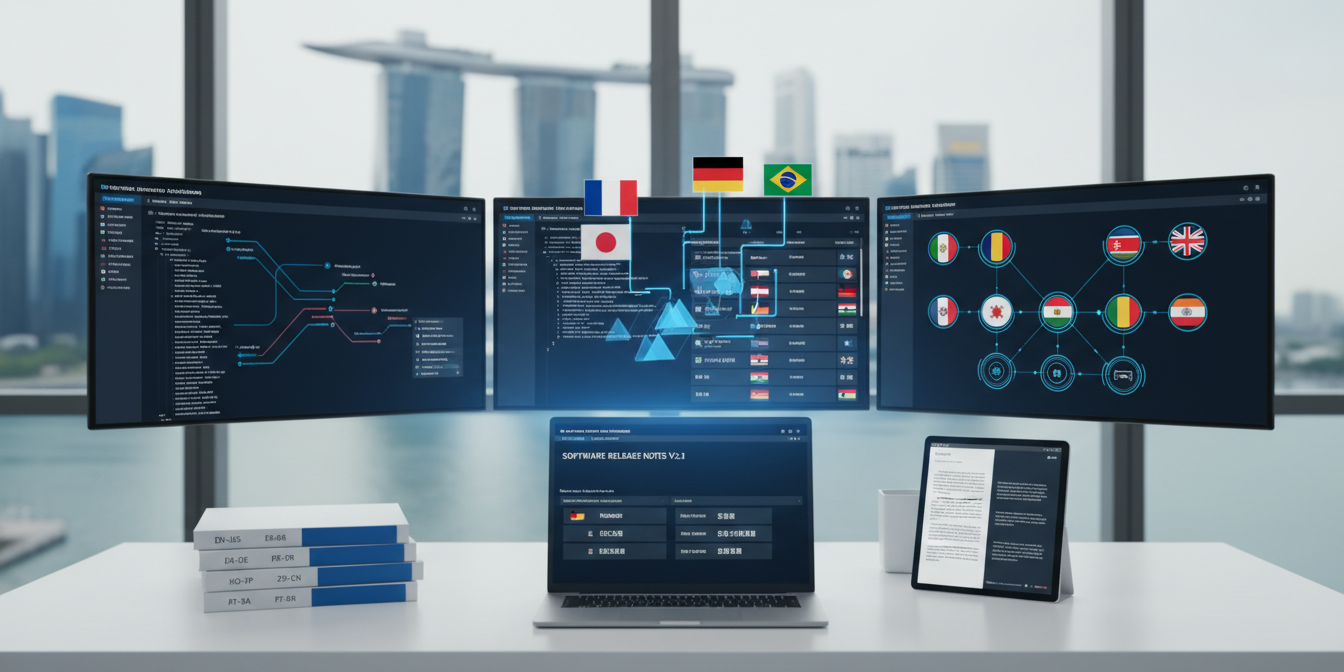
For software companies serving the Asia Pacific region, these challenges multiply. Markets like Singapore, where Translated Right is based, often require multiple language versions to serve diverse user populations. Major software platforms frequently need release notes in Mandarin Chinese, Malay, Tamil, Japanese, Korean, and other regional languages, each with distinct technical vocabularies and formatting conventions.
The stakes are high because release notes directly impact user adoption of new features and updates. Well-localized release communications build trust, reduce support inquiries, and demonstrate your commitment to international markets. Conversely, poor translations containing errors or inconsistencies can erode confidence in your software quality and professionalism.
Key Components of a Release Notes Localization Workflow
An effective localization workflow for software release notes consists of several interconnected components that work together to ensure quality and efficiency. Understanding these foundational elements helps you design a system tailored to your organization’s specific needs and release cadence.
Source Content Management: This involves creating and maintaining your English (or source language) release notes in a format that facilitates translation. Structured content formats like Markdown, XML, or JSON enable better integration with translation management systems and reduce formatting issues during localization.
Translation Memory and Terminology Databases: These linguistic assets store previously translated content and approved terminology, ensuring consistency across releases. When you describe a feature as “real-time synchronization” in one release, translation memory ensures the same phrase appears identically in future releases, maintaining brand voice and reducing translation costs.
Quality Assurance Processes: Multiple review stages catch errors before publication. This includes linguistic review by professional translators, technical validation by bilingual subject matter experts, and formatting checks to ensure the localized version displays correctly across all platforms.
Project Management Infrastructure: Coordination tools and clearly defined processes keep your localization workflow moving smoothly. This includes notification systems that alert translators when new content is ready, tracking mechanisms that monitor translation progress, and approval workflows that route content through appropriate reviewers.
Phase 1: Preparation and Content Analysis
The preparation phase sets the foundation for successful localization by organizing source content and establishing clear parameters for the translation work ahead. This stage significantly impacts both the quality of final translations and the efficiency of your entire workflow.
Begin by conducting a thorough content analysis of your release notes. Identify which sections contain new content requiring fresh translation versus repeated elements that can leverage existing translation memory. Note any new technical terms, product names, or feature descriptions that need to be added to your terminology database. This analysis helps provide accurate time and cost estimates to your translation team.
Content Structuring: Organize your release notes using consistent structural patterns. Group similar types of information together (new features, improvements, bug fixes, known issues) and use standardized formatting. This consistency allows translators to work more efficiently and helps maintain parallel structures across language versions.
Context Documentation: Technical translators produce better results when they understand the broader context. Provide screenshots of new features, links to related documentation, and explanations of technical concepts that may not be immediately clear from the release notes text alone. For UI-related updates, specify whether certain terms should match existing interface translations.
Target Language Selection: Confirm which languages require translation for this release. Some software companies maintain different language portfolios for different product tiers or markets. Establishing this upfront prevents delays later in the workflow.
During preparation, also confirm your timeline and establish realistic deadlines with your translation provider. Companies like Translated Right, with networks of over 5,000 certified translators covering 50+ languages, can often accommodate tight schedules, but advance notice enables better resource allocation and prevents rushed work that could compromise quality.
Phase 2: Translation and Linguistic Quality Assurance
The translation phase represents the core of your localization workflow, where source content transforms into accurate, culturally appropriate versions for each target market. Professional language translation services employ specialized translators who combine linguistic expertise with technical knowledge relevant to software documentation.
Quality translation of software release notes requires more than fluency in both languages. Translators must understand software development terminology, recognize common UI patterns, and navigate the unique challenges of technical writing. They need familiarity with version control concepts, software architecture terms, and the specific vocabulary used in your industry sector, whether that’s fintech, e-commerce, enterprise SaaS, or mobile applications.
Translation Process Steps
1. Initial Translation: Certified translators with relevant technical expertise translate the source release notes while referencing your terminology database and translation memory. They maintain consistency with previously translated product documentation and adapt content to sound natural in the target language rather than producing literal, awkward translations.
2. Self-Review: Translators review their own work, checking for completeness, accuracy, and natural language flow. This self-check catches obvious errors before the content moves to additional review stages.
3. Linguistic Quality Assurance: A second linguist reviews the translation against the source text. This proofreading step verifies accuracy, checks grammar and spelling, ensures terminology consistency, and confirms that the translation reads naturally for native speakers.
4. Cultural Adaptation: Beyond literal translation, professional services assess whether content requires cultural adaptation. Metaphors, idioms, or examples that resonate in one culture may confuse users in another. Cultural review ensures your messaging lands effectively across different markets.
For companies working with professional translation services like Translated Right, this multi-stage quality assurance process is standard practice. Their rigorous approach includes translation, grammar proofreading, editing, and cultural review, ensuring release notes meet the high standards your international users expect.
Phase 3: Technical Review and Validation
Technical review bridges the gap between linguistic accuracy and technical correctness. Even perfectly translated text can fail users if technical terms don’t match your product’s actual interface, if version numbers are incorrect, or if technical specifications are misrepresented.
Ideally, this review involves bilingual team members who understand both the target language and your product’s technical architecture. These reviewers verify that feature names match localized UI strings, that technical specifications are accurately represented, and that instructions or procedures translate correctly. They catch issues like a translated button name that doesn’t match what actually appears in the localized interface.
Functional Verification: If your release notes reference specific UI workflows or user actions, reviewers should verify these steps in the localized product version. A release note instructing users to “navigate to Settings > Privacy > Data Management” must reflect the actual menu hierarchy in each language version of your software.
Formatting and Layout Validation: Different languages require different amounts of space. German text typically expands 30% beyond English, while Chinese or Japanese may contract. Review how translated release notes display across different platforms (web, mobile, in-app notifications) to ensure formatting remains clean and readable. Professional desktop publishing services can assist with complex layout adjustments when needed.
Link and Reference Checking: Verify that hyperlinks point to translated versions of referenced documentation, that version numbers are correct, and that any embedded code snippets or command examples work properly. This attention to detail separates adequate localization from exceptional user experiences.
For organizations without in-house bilingual technical reviewers, translation service providers can often arrange subject matter expert review as part of their quality assurance process. This ensures your release notes receive both linguistic and technical validation before publication.
Phase 4: Publishing and Distribution
The final workflow phase involves publishing localized release notes and distributing them through appropriate channels to reach your international user base. This stage requires coordination across multiple platforms and careful attention to timing, especially for coordinated global releases.
Most software companies distribute release notes through multiple channels including in-app notifications, email announcements, website publication, app store descriptions, and social media. Your workflow should account for format variations across these channels. An in-app notification might display a condensed version while your website hosts the complete release notes with full formatting.
Coordinated Publication: For simultaneous global releases, coordinate publication timing across all language versions. Publishing English release notes days before other languages can frustrate international users and create support challenges. If staggered releases are unavoidable, communicate timelines clearly to manage user expectations.
Version Control: Maintain clear version tracking for each language’s release notes. This becomes critical when you need to issue corrections or updates. Well-organized version control prevents confusion about which translation corresponds to which product release, particularly important when managing multiple release branches or rapid iteration cycles.
Feedback Collection: Establish mechanisms to collect user feedback on localized release notes. International users can identify issues that internal reviewers missed, such as terminology that doesn’t resonate with local conventions or explanations that lack clarity. This feedback improves future localization quality.
Consider automating aspects of the publication process where possible. Integration between your translation management system and content management platform can streamline publication, reducing manual work and potential errors. However, always include a final human review before making content live to catch any last-minute issues.
Best Practices for Streamlined Localization
Optimizing your release notes localization workflow requires attention to both process design and content creation practices. These best practices emerge from successful software localization programs across industries.
Write for Translatability: Create source release notes with translation in mind. Use clear, concise language and avoid idioms, cultural references, or wordplay that doesn’t translate well. Shorter sentences generally translate more accurately than complex compound sentences. This practice improves both translation quality and efficiency.
Maintain Terminology Consistency: Develop and maintain a comprehensive terminology database that defines approved translations for product-specific terms. When your development team introduces new concepts or features, add approved terminology immediately rather than allowing inconsistent translations to proliferate across releases.
Build Translation Memory Assets: Translation memory pays dividends over time. Consistent phrases like “This release includes the following improvements” or “Fixed an issue where…” appear in nearly every release. Translation memory automatically reuses these translations, reducing costs and improving consistency.
Establish Style Guidelines: Create localization style guides for each target language that specify preferences for tone, formality level, technical term handling, and formatting conventions. These guidelines help different translators who work on your content over time maintain a consistent brand voice.
Plan for Adequate Turnaround Time: Quality translation requires time. While rush services exist for urgent situations, regularly compressing timelines increases costs and may compromise quality. Build localization time into your release planning from the beginning rather than treating it as an afterthought.
Leverage Professional Expertise: Working with established translation service providers brings significant advantages. Companies like Translated Right offer not just translation but comprehensive website translation and localization expertise. Their quality assurance processes, translator networks, and experience across industries help avoid common pitfalls.
Common Challenges and Solutions
Even well-designed localization workflows encounter challenges. Recognizing common issues and their solutions helps you navigate obstacles more effectively.
Tight Release Schedules
Software development often operates on aggressive timelines that leave little room for translation. When release notes are finalized just days before launch, localization becomes a bottleneck. Solutions include finalizing feature lists earlier to enable preliminary translation, working with translation partners who can mobilize resources quickly, and considering simultaneous translation where translators work from draft release notes that may still undergo minor revisions.
Inconsistent Terminology
Without strong terminology management, the same feature might be described differently across releases, confusing users and degrading professional image. Implement mandatory terminology review before translation begins, maintain centralized terminology databases accessible to all translators, and designate a terminology manager responsible for approving new terms and resolving conflicts.
Technical Complexity
Highly technical release notes describing architectural changes, API updates, or complex bug fixes challenge even experienced translators. Provide detailed context documentation, arrange access to technical subject matter experts who can answer translator questions, and consider specialized translators with backgrounds in software engineering or IT rather than general translators.
Format and Layout Issues
Text expansion, special characters, or right-to-left languages can break carefully designed release note layouts. Test localized content in actual display environments before publication, work with translation providers who offer formatting services, and design flexible layouts that accommodate text length variations. Professional transcription services and desktop publishing expertise can help resolve complex formatting challenges.
Cost Management
Localization represents a significant investment, especially for software companies supporting many languages. Maximize translation memory leverage to reduce per-word costs over time, prioritize languages by market importance and allocate resources accordingly, and establish long-term partnerships with translation providers who offer volume discounts and preferential rates for ongoing relationships.
Choosing the Right Localization Partner
Selecting a translation service provider significantly impacts your workflow’s success. The right partner becomes an extension of your team, understanding your product, your users, and your quality standards.
Look for providers with demonstrated expertise in software and technology translation. Generic translation agencies may lack the specialized knowledge required for technical content. Review their quality assurance processes to ensure multiple review stages and appropriate expertise levels. A rigorous QA process that includes translation, editing, proofreading, and technical review produces consistently better results.
Network and Capacity: Evaluate whether the provider can scale to meet your needs. Software companies often expand into new markets, requiring additional language pairs. A provider with extensive translator networks covering diverse languages offers flexibility as your localization requirements grow. Translated Right’s network of over 5,000 certified translators across 50+ languages exemplifies the capacity needed to support global software companies.
Industry Experience: Providers serving major brands bring valuable perspective from working with established localization programs. Experience with companies like AIA, Motorola, and Marina Bay Sands demonstrates the capability to meet enterprise quality standards and handle complex, high-volume localization projects.
Geographic Expertise: For companies targeting specific regions, local expertise matters. A Singapore-based provider like Translated Right brings deep understanding of Asia Pacific markets, cultural nuances, and regional language variations that might escape providers based in other regions.
Service Integration: Consider providers offering comprehensive language services beyond basic translation. You may need document translation, website localization, or transcription services as your international presence grows. Working with a provider offering integrated services simplifies vendor management and ensures consistency across all localized content.
Technology Integration: Modern translation workflows benefit from technology integration. Evaluate whether potential partners use translation management systems, support API integrations with your development tools, and employ computer-assisted translation tools that improve efficiency without sacrificing quality.
Finally, assess communication and project management capabilities. Your localization partner should provide clear timelines, proactive updates on project status, and responsive communication when questions or issues arise. Strong project management prevents localization from becoming a release bottleneck.
Establishing an efficient software release notes localization workflow requires thoughtful planning, robust processes, and the right partnerships. By systematically addressing each phase from content preparation through publication, you create a sustainable system that delivers high-quality multilingual release communications while keeping pace with your development cycle.
The investment in proper localization workflow pays dividends through improved user satisfaction, reduced support costs, and stronger market penetration in international markets. Users who receive clear, accurate release information in their native language are more likely to adopt new features, upgrade promptly, and maintain positive relationships with your brand.
Remember that localization workflow optimization is an ongoing process. Regularly review your workflow performance, gather feedback from both internal stakeholders and end users, and refine processes based on lessons learned. As your software evolves and your international user base grows, your localization workflow should evolve in parallel.
Whether you’re just beginning to localize release notes or seeking to optimize an established workflow, partnering with experienced language service providers accelerates your success. Professional translation services bring specialized expertise, proven processes, and scalable resources that enable you to focus on building great software while ensuring your global users stay informed and engaged.
Ready to Streamline Your Software Release Notes Localization?
Translated Right’s team of certified translators and localization experts can help you establish a workflow that delivers exceptional multilingual release communications. With rigorous quality assurance, rapid turnaround times, and expertise across 50+ languages, we’re trusted by leading software companies throughout the Asia Pacific region.