
Table Of Contents
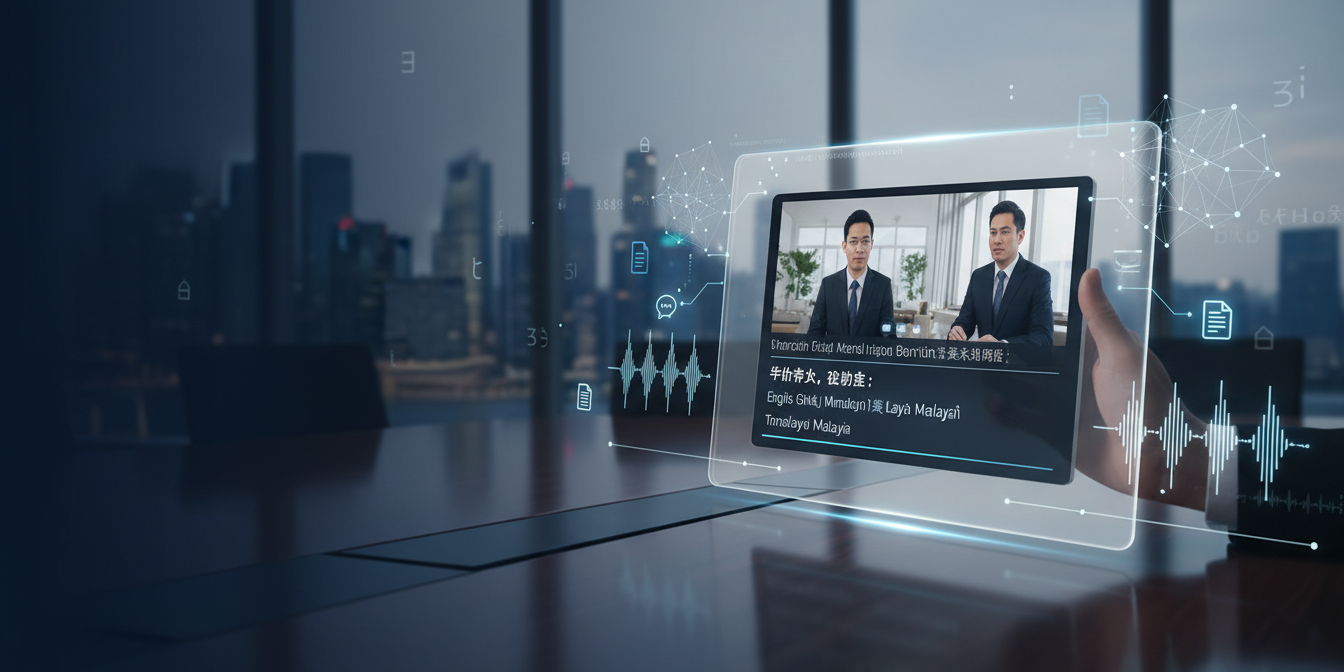
The way we consume and share information is fundamentally changing. Video content now dominates digital communication, with businesses, educators, and content creators reaching global audiences through visual media. Yet language barriers remain a significant challenge. Enter multimodal translation, an emerging technology that promises to transform how we translate video content by simultaneously processing visual, auditory, and textual information to deliver accurate, contextually appropriate translations.
Unlike traditional translation methods that handle text in isolation, multimodal translation systems analyze multiple data streams at once. They watch what’s happening on screen, listen to the spoken words, read any visible text, and understand how these elements interconnect to convey meaning. This holistic approach addresses the complexity of real-world communication, where a gesture, facial expression, or on-screen graphic can fundamentally alter the meaning of spoken words.
As we look toward 2027, multimodal translation technology is positioned to revolutionize industries from entertainment and education to corporate communications and legal proceedings. For businesses operating in multilingual markets like Singapore and the broader Asia Pacific region, understanding these developments isn’t just about staying current with technology trends. It’s about preparing for a future where seamless cross-language video communication becomes a competitive necessity.
What is Multimodal Translation?
Multimodal translation refers to translation systems that process and integrate information from multiple input sources or “modalities” simultaneously. Rather than translating text alone, these advanced systems analyze combinations of text, speech, images, video, and even gestures to produce more accurate and contextually appropriate translations.
The “multimodal” aspect is crucial because human communication naturally involves multiple channels. When someone presents at a conference, they’re not just speaking words—they’re using slides with text and graphics, making gestures, displaying facial expressions, and referencing visual elements. A truly effective translation must account for all these dimensions. Traditional translation approaches that focus solely on linguistic content often miss critical contextual clues that fundamentally shape meaning.
In practical terms, multimodal translation for video content involves several simultaneous processes. The system transcribes spoken dialogue, identifies and translates on-screen text, analyzes visual context to resolve ambiguities, and considers cultural elements that might require adaptation rather than literal translation. This integrated approach produces transcriptions and translations that feel natural and accurate because they account for the full communication context.
For professional translation services like those provided across the Asia Pacific region, multimodal technology represents both an exciting opportunity and a significant evolution in methodology. The technology augments human expertise rather than replacing it, enabling translators to work more efficiently while maintaining the cultural sensitivity and contextual understanding that only human professionals can provide.
The Current State of Multimodal Translation Technology
As of 2024, multimodal translation exists primarily in research laboratories and beta implementations by major technology companies. Several tech giants have demonstrated prototype systems that can generate subtitles while considering visual context, or translate presentation slides while accounting for spoken commentary. However, these systems remain limited in scope, language coverage, and accuracy compared to what industry experts anticipate for 2027.
Current implementations excel in controlled environments with clear audio, standardized visuals, and well-structured content. For instance, translating corporate training videos with professional voiceovers and clear on-screen graphics represents a relatively straightforward use case. The technology struggles more with spontaneous speech, multiple speakers, heavy accents, low-quality video, and complex visual scenes where context becomes ambiguous. These limitations explain why human translators remain essential for quality assurance and complex projects.
The evolution of website translation provides an instructive parallel. Early machine translation of websites produced notoriously poor results, but modern systems combined with professional oversight now deliver excellent outcomes. Multimodal translation is following a similar trajectory, with AI handling routine elements while human experts provide cultural adaptation, quality control, and handling of nuanced content.
Major advancements driving current capabilities include improved speech recognition across accents and languages, optical character recognition (OCR) that can extract text from video frames even with complex backgrounds, and computer vision systems that can identify objects, people, and actions within video content. These technologies are converging to create integrated multimodal systems, though significant challenges remain before they achieve the reliability required for professional applications.
Key Components of Multimodal Translation Systems
Understanding multimodal translation requires familiarity with its core technological components. Each element addresses a specific aspect of the complex challenge of translating video content.
Automatic Speech Recognition (ASR)
Automatic Speech Recognition forms the foundation of video translation by converting spoken dialogue into text transcripts. Modern ASR systems use deep learning models trained on thousands of hours of speech in multiple languages. For multimodal systems, ASR must handle challenges like background noise, multiple speakers, accents, and domain-specific terminology. The accuracy of this initial transcription significantly impacts the quality of the final translation, which is why professional transcription services often review and correct automated outputs before translation begins.
Computer Vision and Scene Understanding
Computer vision enables systems to “see” and interpret visual content in video. This includes identifying objects, people, text overlays, actions, and scene context. For translation purposes, visual understanding helps resolve ambiguities in spoken language. For example, if a speaker says “this one” while pointing to an object, the computer vision component identifies what’s being referenced, allowing the translation to be more specific and clear in the target language. This capability becomes especially important for languages with different pronoun systems or where explicit subject identification is culturally expected.
Neural Machine Translation (NMT)
Once speech is transcribed and visual context is understood, Neural Machine Translation engines perform the actual language conversion. Unlike older phrase-based systems, NMT considers entire sentences and broader context when selecting translations. In multimodal systems, NMT engines receive additional contextual information from visual and audio analysis, allowing them to make more informed translation choices. However, even advanced NMT benefits enormously from human oversight, particularly for specialized content in legal, financial, or technical domains where precision is critical.
Multimodal Fusion and Integration
The most sophisticated aspect of these systems is the fusion layer that integrates information from different modalities. This component determines how to weight and combine insights from speech, text, and visual analysis. If the visual context strongly suggests one interpretation while the acoustic signal suggests another, the fusion system must decide which to prioritize. This decision-making process increasingly relies on attention mechanisms and transformer architectures that can learn which modality provides the most reliable information for different types of content.
Applications Across Industries
The practical applications of multimodal translation extend across virtually every sector that relies on video communication. Understanding these use cases helps businesses prepare for the technology’s mainstream adoption.
Entertainment and Media
The entertainment industry represents one of the most promising markets for multimodal translation. Streaming platforms serving global audiences need to localize content quickly and cost-effectively. Multimodal systems can generate initial subtitle drafts that account for on-screen text, visual gags, and cultural references, dramatically reducing the time human translators spend on each project. For content providers operating across the diverse linguistic landscape of Asia Pacific, this technology could enable same-day releases across multiple language markets, a significant competitive advantage.
Corporate Communications and Training
Multinational corporations regularly produce training videos, town halls, and instructional content that must reach employees in multiple languages. Multimodal translation can process these videos to generate localized versions with translated subtitles, dubbed audio, and even translated on-screen text and graphics. Companies like AIA, Motorola, and other major brands with global operations can use these technologies to ensure consistent messaging across regions while respecting local language preferences and cultural norms through professional localization services.
Education and E-Learning
The e-learning sector has exploded globally, but language barriers limit the reach of educational content. Multimodal translation enables educational institutions and online learning platforms to make video lectures accessible to international students. The technology is particularly valuable for STEM education, where visual diagrams, on-screen equations, and demonstrations must be coordinated with translated audio explanations. This application has significant implications for Singapore’s position as a regional education hub serving students from across Southeast Asia.
Legal and Government Services
Legal proceedings, government announcements, and official communications increasingly involve video content. Multimodal translation can assist in creating accessible versions of these materials for diverse populations. However, the high stakes of legal and government content mean that human verification remains essential. Professional translation services with expertise in legal terminology and government requirements will continue to provide critical oversight, ensuring that automated translations meet the stringent accuracy standards required for official use with agencies like Singapore’s ICA, MOM, and State Courts.
What to Expect by 2027
By 2027, industry experts anticipate several significant advancements that will make multimodal translation more capable, accessible, and integrated into standard workflows.
Real-Time Multimodal Translation
Real-time processing represents the holy grail of translation technology. By 2027, we expect to see systems capable of translating live video streams with minimal latency, enabling applications like live-translated video conferences, real-time subtitle generation for broadcasts, and instantaneous translation of video calls. This capability will transform international business communications, making language differences far less of a barrier to collaboration. However, the complexity of maintaining accuracy at high speed means that human oversight will remain valuable for critical communications.
Expanded Language Coverage
Current multimodal systems focus primarily on major languages with abundant training data. By 2027, coverage is expected to expand significantly to include regional and lower-resource languages. For the Asia Pacific region, this means better support for languages like Tagalog, Vietnamese, Indonesian, Thai, and various Chinese dialects beyond Mandarin. This expansion will be crucial for businesses operating across Southeast Asia’s linguistically diverse markets, complementing the broad language coverage already provided by professional translation networks spanning 50+ languages.
Improved Cultural Adaptation
Future systems will go beyond literal translation to provide cultural adaptation automatically. This includes recognizing culturally specific gestures, identifying when visual elements need localization (such as signs, product packaging, or text overlays), and even suggesting when content might be culturally sensitive or require special handling. While AI can flag these issues, human cultural experts will remain essential for making final adaptation decisions, particularly for marketing content and materials representing brand identity across diverse markets.
Integration with Content Creation Tools
By 2027, multimodal translation will be integrated directly into video editing and content management systems. Creators will be able to produce content with translation and localization capabilities built into their workflows from the start, rather than treating translation as a post-production step. This integration will include coordination with desktop publishing services for graphics and text overlays, ensuring that visual elements are designed from the beginning to accommodate multiple languages.
Personalization and Accessibility
Personalized translation will allow viewers to select not just their language, but also their preferred formality level, dialect, or even specific terminology preferences. This personalization extends accessibility, making content usable by audiences with different language proficiency levels. Simplified translations for language learners and highly technical translations for experts could be generated from the same source material, dramatically expanding content reach.
Challenges and Opportunities Ahead
Despite the promising trajectory, multimodal translation faces several significant challenges that will shape its development and adoption over the coming years.
Technical Limitations
Computational requirements for real-time multimodal processing remain substantial. Processing multiple data streams simultaneously demands significant computing power, which impacts both cost and energy consumption. Edge computing and specialized AI chips will help address this challenge, but limitations will persist, particularly for resource-constrained applications. Additionally, maintaining synchronization between translated audio, subtitles, and visual elements presents ongoing technical challenges, especially when languages differ significantly in sentence structure and word order.
Quality and Accuracy Concerns
While AI translation quality improves constantly, accuracy for specialized content remains challenging. Legal terminology, medical instructions, financial disclosures, and technical documentation require precision that fully automated systems cannot yet guarantee consistently. This reality creates opportunities for hybrid models combining AI efficiency with human expertise, particularly through professional proofreading services that verify and refine machine-generated translations before publication.
Cultural and Ethical Considerations
Cultural sensitivity represents perhaps the most complex challenge for automated systems. Humor, idioms, visual symbolism, and gesture meanings vary dramatically across cultures. Automated systems may miss subtleties that could offend or confuse audiences. Furthermore, decisions about how to handle culturally specific content involve value judgments that many argue should remain in human hands. Questions about whose cultural perspective shapes AI training data and whose norms inform adaptation decisions raise important ethical considerations for the industry.
Data Privacy and Security
Processing video content for translation often involves handling sensitive or confidential information. Corporate communications, legal proceedings, and private educational content require robust security measures. Cloud-based processing raises data sovereignty concerns, particularly relevant in regions with strict data protection regulations. Solutions involving on-premises processing or secure cloud environments will be essential for enterprise adoption, particularly for clients in regulated industries like finance, healthcare, and government.
The Continuing Role of Human Expertise
Far from making human translators obsolete, multimodal translation technology is reshaping their role and amplifying their impact. The future of translation lies not in choosing between human and machine, but in optimizing how they work together.
Professional translators bring irreplaceable skills to the process: deep cultural knowledge, understanding of context and intent, creative problem-solving for untranslatable concepts, and quality judgment based on years of experience. As multimodal AI handles routine aspects of video translation—initial transcription, draft translation, timing synchronization—human experts can focus on higher-value activities like cultural adaptation, quality assurance, specialized terminology, and handling sensitive content that requires judgment and discretion.
This evolution mirrors changes in other professional fields where technology augments rather than replaces expertise. Just as calculators made mathematicians more productive rather than obsolete, and word processors enhanced rather than eliminated professional writing, multimodal translation tools will enable language professionals to work more efficiently while maintaining the quality standards that professional services demand.
For clients requiring language translation services, this human-AI collaboration offers the best of both worlds: the speed and cost-effectiveness of automated processing combined with the accuracy, cultural sensitivity, and quality assurance that only human experts provide. This is particularly crucial for businesses operating across the culturally diverse Asia Pacific region, where subtle cultural differences can significantly impact communication effectiveness.
The rigorous quality assurance processes that characterize professional translation—including translation, grammar proofreading, editing, and cultural review—remain essential in the multimodal era. Technology enhances these processes but doesn’t replace them. The most successful translation providers will be those who master the integration of advanced multimodal AI tools with proven quality assurance methodologies and deep human expertise.
Multimodal translation represents a transformative shift in how we bridge language barriers in an increasingly video-centric world. By 2027, we can expect these technologies to be significantly more capable, accessible, and integrated into everyday business and creative workflows. The ability to automatically translate video content while accounting for visual context, on-screen text, and cultural nuances will open new possibilities for global communication, education, entertainment, and commerce.
Yet this technological revolution doesn’t diminish the value of human expertise. Rather, it elevates it. As AI handles routine processing tasks, human translators become even more valuable for their cultural insight, quality judgment, and ability to handle nuanced content requiring sensitivity and discretion. The future belongs to hybrid approaches that combine technological efficiency with human excellence.
For businesses preparing for this future, the key is partnering with translation providers who understand both the potential of emerging technologies and the irreplaceable value of human expertise. Whether you’re localizing video content for regional markets, creating multilingual training materials, or ensuring accurate translation of sensitive communications, the combination of advanced tools and professional oversight delivers results that neither technology nor humans alone can achieve.
Future-Ready Translation Services for Your Business
As multimodal translation technology evolves, Translated Right combines cutting-edge capabilities with the human expertise your business needs. With over 5,000 certified translators covering 50+ languages, rigorous quality assurance processes, and specialization across legal, financial, government, IT, pharma, and marketing sectors, we’re ready to help you navigate the future of multilingual communication.
Whether you need video localization, document translation, or comprehensive language services across the Asia Pacific region, our team delivers accurate, culturally appropriate translations you can trust.