
Managing purchase orders and invoices for translation projects might not be the most glamorous part of running a multilingual business, but it is often one of the most time-consuming. Between coordinating multiple language pairs, tracking deliverables from different translators or agencies, reconciling costs against approved budgets, and chasing approvals across departments, the administrative burden can quietly eat into the very productivity gains that outsourcing translation is supposed to deliver.
Automating PO and invoice workflows in translation projects is increasingly how forward-thinking businesses — from multinational corporations to regional enterprises in Asia Pacific — are reclaiming that lost time. When the financial and operational side of translation is handled through smart automation, teams can focus on what matters most: ensuring accurate, culturally appropriate communication across every language and market. This article explores what workflow automation looks like in a translation context, the concrete benefits it delivers, what to look for in the tools you choose, and how to avoid the most common implementation mistakes.
Why Administrative Overhead Slows Translation Projects
Translation projects are rarely simple one-off transactions. A single campaign requiring localisation services across five languages might involve multiple specialists — translators, proofreaders, cultural reviewers, and desktop publishing experts — each generating their own cost lines and delivery milestones. When procurement teams manage all of this manually, using spreadsheets or email chains, the risk of errors compounds at every step.
Missed PO references, duplicate invoices, mismatched amounts, and delayed approvals are not just inconveniences — they can hold up project delivery, strain vendor relationships, and create compliance headaches in regulated industries like legal, finance, and pharmaceuticals. For businesses working with translation partners across multiple jurisdictions, the challenge is even greater: different currencies, tax treatments, and billing cycles add further complexity to an already fragmented process.
The root cause is usually the same: financial workflows that were not designed with the unique structure of translation projects in mind. Standard procurement systems handle simple goods or one-time service engagements well, but the iterative, milestone-driven nature of translation work — where scope can shift as source content evolves — demands something more adaptive.
What PO and Invoice Automation Actually Means in Translation
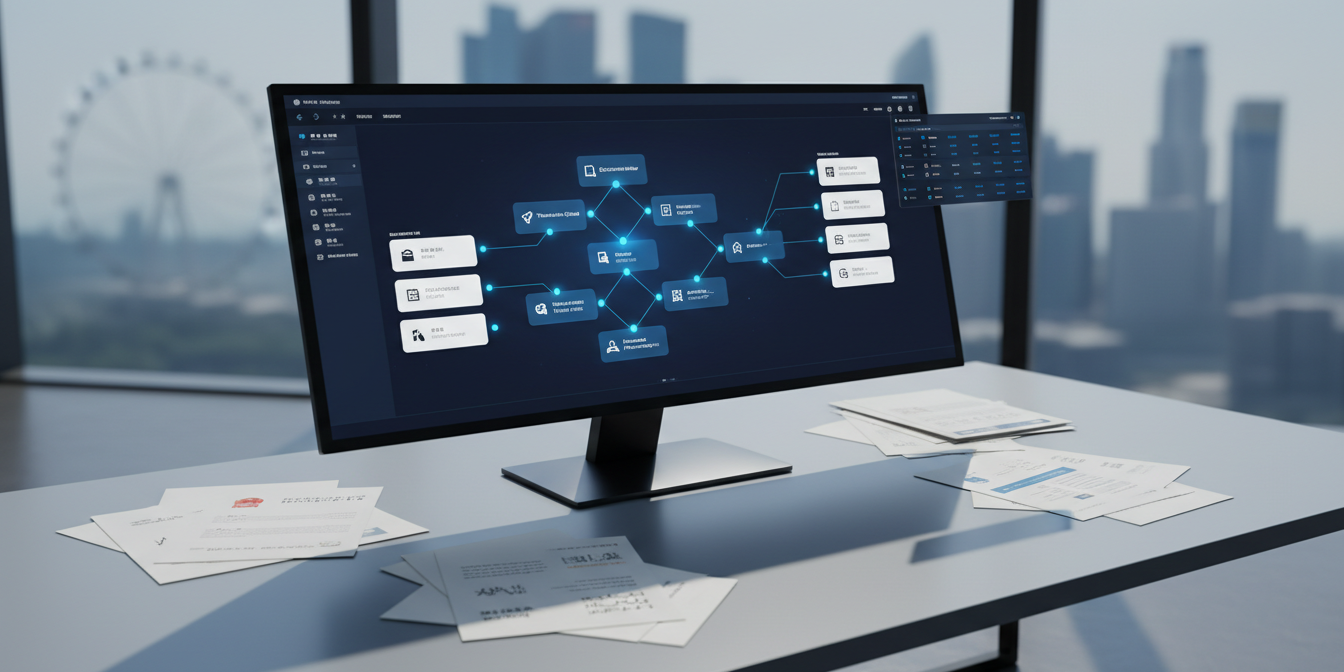
At its core, automating PO and invoice workflows means replacing manual data entry, email-based approvals, and disconnected spreadsheets with a system that creates, routes, matches, and records financial documents without human intervention at every step. In a translation project context, this typically covers several interconnected processes.
Purchase Order Generation: When a translation project is scoped and approved, the system automatically generates a PO with the correct vendor details, language pairs, service type, and agreed rate — pulling from pre-approved vendor lists and rate cards rather than requiring someone to type this in from scratch each time.
Invoice Matching and Validation: When the translation partner submits an invoice, the automation layer checks it against the original PO. Word counts, rates, service categories, and delivery milestones are verified automatically. Discrepancies are flagged for human review rather than passed through silently.
Approval Routing: Instead of invoices sitting in someone’s inbox waiting for a signature, automated workflows route documents to the right approver based on project type, cost threshold, or department — with escalation rules if approvals are not completed within a set timeframe.
Record-Keeping and Reporting: Every transaction is logged, timestamped, and stored in a way that makes auditing straightforward and financial reporting accurate, whether you are reporting by language pair, project type, quarter, or client department.
Key Benefits of Automating PO and Invoice Workflows
The business case for automation in translation procurement is compelling across several dimensions, and it tends to grow stronger the more languages and projects a business manages simultaneously.
Speed and Cycle Time: Manual invoice processing in professional services can take anywhere from several days to several weeks. Automated matching and routing compresses this to hours in many cases, which matters enormously for vendors who are more motivated to prioritize clients with smooth, predictable payment cycles. For businesses commissioning language translation services at scale, faster payment cycles also support better vendor access and pricing.
Accuracy and Reduced Disputes: Human error in manual data entry is inevitable. When a translator’s rate is entered incorrectly or a word count is transposed, the resulting invoice dispute delays payment and absorbs time from both the client and the translation provider. Automated systems that pull data directly from project management tools or CAT (computer-assisted translation) platforms dramatically reduce these errors at the source.
Compliance and Audit Readiness: For businesses in regulated sectors — financial services, government contracting, pharmaceuticals — every purchase must be traceable and justifiable. Automated workflows create a clean audit trail by default, without requiring anyone to reconstruct the history of a transaction manually after the fact.
Cost Visibility: Automation gives finance teams real-time visibility into translation spend by project, department, language, and service type. This makes budgeting more accurate, surfaces opportunities to consolidate vendors, and helps identify where translation investment is delivering the strongest return.
Core Features to Look for in Workflow Automation Tools
Not all workflow automation tools are equally suited to the translation industry. When evaluating platforms — whether standalone procure-to-pay systems or translation management systems (TMS) with built-in financial modules — there are several capabilities worth prioritising.
- Integration with project management workflows: The PO system should ideally connect directly to how projects are tracked, so that when a project is approved, a PO is triggered automatically rather than as a separate manual step.
- Support for word-count and unit-based billing: Unlike most professional services that bill by the hour, translation billing is often based on word counts, page counts, or language pair rates. The system needs to handle these billing units natively.
- Multi-currency and multi-entity support: For businesses working across Asia Pacific — managing translations in Mandarin, Bahasa Indonesia, Thai, Japanese, and more — the ability to handle multiple currencies and tax regimes in a single system is essential.
- Configurable approval hierarchies: Different project types carry different financial risks. A system that lets you set different approval thresholds and routing rules for different cost centres gives you control without creating bottlenecks.
- Vendor self-service portals: Translation partners who can submit invoices, check payment status, and update their details through a portal reduce administrative back-and-forth for both sides.
- Reporting and analytics: Dashboards that show spend by language, project type, and time period help procurement and localization teams make better decisions about resource allocation and vendor relationships.
Businesses that also rely on transcription services or typesetting and desktop publishing as part of their broader content pipeline will want to ensure their automation system can accommodate these service types without requiring separate procurement processes for each one.
How Automation Integrates Across Translation Services
One of the most practical advantages of workflow automation is that it works equally well regardless of which translation services are being procured. Whether a business is commissioning website translation for a regional product launch, ordering professional proofreading for compliance documents, or managing an ongoing localisation programme across multiple markets, the underlying financial process follows the same structure: scope is agreed, a PO is issued, work is delivered, and an invoice is submitted and matched against that PO.
This consistency is actually one of automation’s greatest strengths. When businesses manage several service types — translation, proofreading, transcription, desktop publishing — under separate manual processes, the cognitive and administrative overhead multiplies. A unified automated workflow treats all these services consistently, making it easier to see total translation spend in one place and to apply the same compliance standards across every purchase type.
For businesses that work with a trusted translation partner rather than managing a fragmented network of freelancers, automation becomes even simpler. A single vendor relationship means fewer vendor profiles to maintain, a smaller number of rate cards to manage, and a more predictable invoicing cycle — all of which automation tools handle more reliably when the underlying relationship is already structured and consistent.
Common Pitfalls When Automating and How to Avoid Them
Automation does not solve problems by itself — it amplifies the processes already in place, which means poorly designed workflows will fail faster, not slower. Businesses implementing PO and invoice automation in their translation programmes should be aware of the most common implementation mistakes.
Automating before standardising: If your existing PO and invoice data is inconsistent — different naming conventions for the same service, vendor details stored in multiple formats, rates that vary without clear documentation — automation will lock in that inconsistency rather than fix it. The first step should always be standardising your data and processes, then automating them.
Ignoring change management: Project managers and finance teams who are used to manual processes may resist new tools, particularly if they were not involved in selecting them. Implementation is more successful when end users are consulted early, trained properly, and given clear reasons why the change benefits their day-to-day work.
Underestimating integration complexity: Connecting a new workflow automation tool to an existing ERP, translation management system, or accounting platform often takes longer and costs more than initial estimates suggest. Build in time for testing, and run parallel processes (automated and manual) for a period before switching fully.
Neglecting exception handling: Automation handles standard cases well, but exceptions — scope changes mid-project, disputed word counts, partial deliveries — need clear manual processes defined for when automated matching fails. A good system makes exceptions visible and easy to resolve rather than silently passing them through or blocking the entire workflow.
Getting Started with PO and Invoice Automation
For most businesses, the path to automated PO and invoice workflows in translation starts not with choosing a platform but with auditing the current state of the process. Understanding exactly where time is lost, where errors most frequently occur, and where approval delays are longest will tell you which parts of the workflow will benefit most from automation and in which sequence to tackle them.
A practical starting point is to map the end-to-end lifecycle of a single translation purchase, from initial project approval through to payment confirmation. Identify every manual touchpoint, every handoff between systems or people, and every point where information is re-entered rather than transferred automatically. This map becomes the blueprint for your automation design.
Working with a professional translation partner who has experience operating at scale — with structured onboarding processes, clear rate cards, and consistent invoicing practices — also makes automation significantly easier to implement. Vendors who are accustomed to working within procurement frameworks will adapt more readily to automated systems and are less likely to introduce the kind of inconsistent data that causes matching failures downstream.
The goal is not to remove human judgement from translation procurement but to ensure that human attention is reserved for decisions that actually require it — strategic vendor selection, quality review, and exception handling — while routine financial processing happens reliably and without delay in the background.
Final Thoughts
Automating PO and invoice workflows in translation projects is one of the most impactful operational improvements a business can make to its language services programme. It reduces errors, speeds up payment cycles, improves cost visibility, and frees procurement and project management teams from repetitive administrative tasks that add no strategic value. Done well, it also strengthens vendor relationships by making the experience of working with your organisation predictable and professional.
The key is to approach automation as a process improvement initiative first and a technology project second. Standardise your data, involve your team, choose tools that fit the specific billing structures of translation work, and build clear exception-handling protocols from the start. With the right foundation in place, automated workflows can scale as your translation programme grows — whether you are adding new language pairs, expanding into new markets, or increasing the volume and variety of content you need translated.
Ready to Streamline Your Translation Procurement?
Translated Right works with businesses across Singapore and the Asia Pacific region to deliver structured, professionally managed translation services that fit cleanly into your procurement and finance workflows. From certified document translation to large-scale localisation programmes, our team makes it easy to scope, approve, and invoice translation work with consistency and clarity.